
Living in Warsaw, Poland: Expat Guide
Rebuilt from near-total destruction after WWII with remarkable ambition.
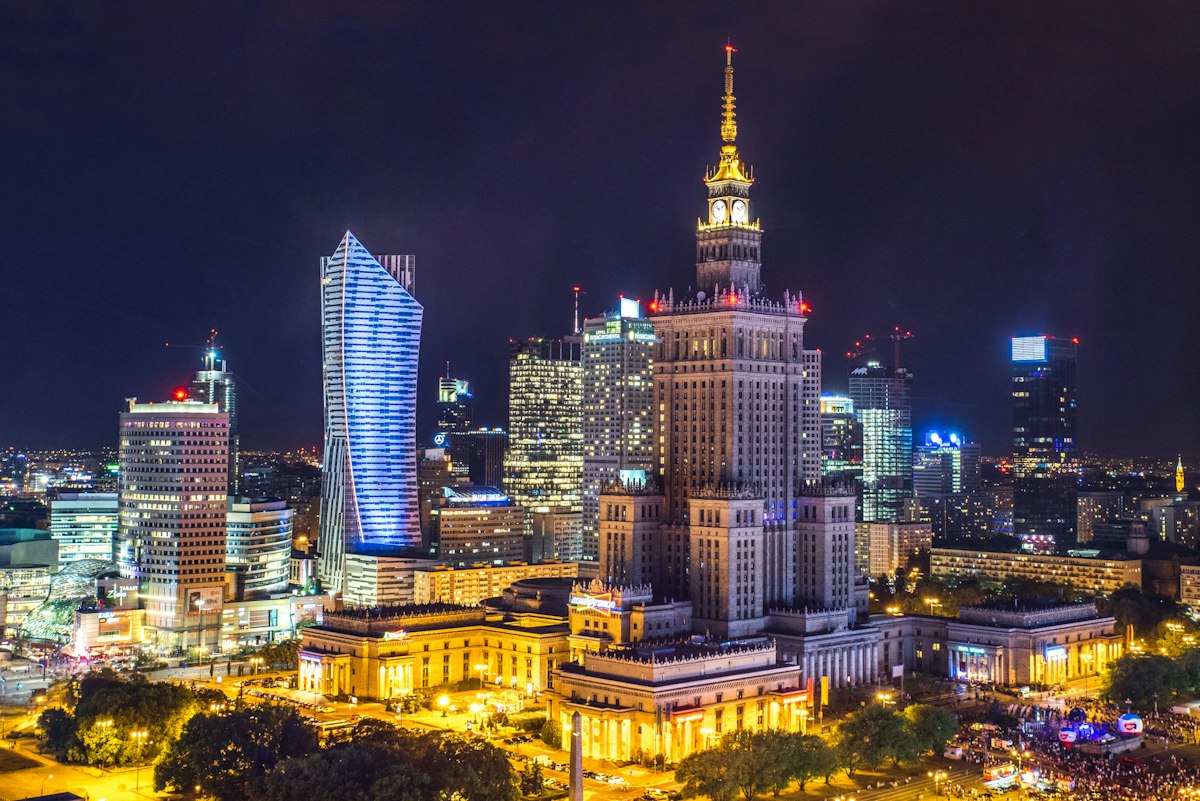
Rebuilt from near-total destruction after WWII with remarkable ambition. Warsaw is now Central Europe's fastest-growing business hub, with a reconstructed Old Town, a modern skyline, and an expat community that arrived quietly and stayed.
Living in Warsaw, Poland means inhabiting a city that rebuilt itself from rubble with extraordinary determination, the Old Town, painstakingly reconstructed after WWII, is now a UNESCO World Heritage Site. Expat life in Warsaw centers on Śródmieście, Żoliborz, and the increasingly popular Praga district across the Vistula. Moving to Warsaw cost of living runs $1,300–$2,800 per month. Warsaw for business is Central Europe's most dynamic: the Warsaw Stock Exchange, major bank headquarters, and growing tech firms have created a professional ecosystem that attracts talent from across the region.
Primary commute: Metro, Tram, Bus
City snapshot
This is usually where things get unclear.
Talk through your move with clarity
Free · 45 minutes
Get a clear read on your situation before you make a decision. We'll map what actually applies to you in Poland, visa paths, cost reality, and the risks most people don't see coming.
Book a Call →Your personalized plan for Poland
Your budget answers, mapped against the cities in Poland: including this one: with neighborhood starting points and a clear cost picture for your move.
$49 · Delivered within 24 hours
City metrics
On the ground
Local Realities
Daily Life
- 01
Milk bars (bar mleczny), surviving from the communist era, remain the most practical and satisfying option for an affordable, filling lunch anywhere in the city center.
Culture
- 02
Warsaw's relationship with its own history is serious and active, the POLIN Museum of Jewish History and the Warsaw Rising Museum are not tourist facilities but active parts of civic memory.
- 03
Warsaw has more murals per capita than almost any European capital, the street art tradition is tied to the city's identity of rebuilding, and the works in Praga and along the Vistula are genuinely worth seeking out.
Reality
- 04
Winters are genuinely cold and grey from November to March, the city functions perfectly, but acclimatisation from a warmer baseline takes most of a season.
Who thrives here
- Business Professionals
- Remote Workers
- Families
- Tech Workers
Honest tradeoffs
- —Cold winters
- —Language barrier with older generation
- —Less historic character than Kraków
- —Some areas lack charm
Typical housing options
Start here
Also worth knowing
Start with a short-term furnished rental for your first 4–8 weeks, it gives you time to explore neighborhoods in person before committing to a long-term lease.
More cities in Poland


Recommended Guides
Guides to help you plan your move to Poland.
The Full Cost of Living Abroad: What Budget Guides Leave Out
The costs that relocation budget guides consistently undercount, insurance, flights home, school fees, tax com…
Easiest Digital Nomad Visas Right Now
The digital nomad visas that are actually easy to obtain in 2026, with clear income requirements, straightforw…
Raising Children Abroad: A Realistic Family Relocation Guide
What raising children internationally actually involves, international school costs, pediatric healthcare, saf…
Best Countries for Remote Workers
The countries that have built genuine infrastructure for remote work: evaluated on visa frameworks, internet q…
You might also like
Cities with a similar feel across other destinations.



Frequently asked questions
How much does it cost to live in Warsaw?
Monthly budgets in Warsaw range from $1,300 to $2,800 for a comfortable lifestyle. Typical housing options include Modern Apartments, Renovated Period Buildings, Suburban Houses.
Is Warsaw good for expats?
Warsaw is particularly well-suited for Business Professionals, Remote Workers, Families, Tech Workers. Key tradeoffs to be aware of: Cold winters; Language barrier with older generation; Less historic character than Kraków; Some areas lack charm. The city scores 7/10 for English-friendliness, making day-to-day life accessible without the local language.
How walkable is Warsaw?
Warsaw scores 7/10 for walkability and 8/10 for public transport. The primary commute mode is Metro, Tram, Bus. Warsaw Chopin (WAW), 30 min; Modlin (WMI) for budget carriers.
Is Warsaw good for families?
Warsaw scores 8/10 for family-friendliness, 8/10 for education access, and 7/10 for healthcare access. It is part of Poland, where international school costs run $400–$1,500/month. English-medium international schools are available in Warsaw and Kraków. Polish public schools are well-regarded and free for EU residents.