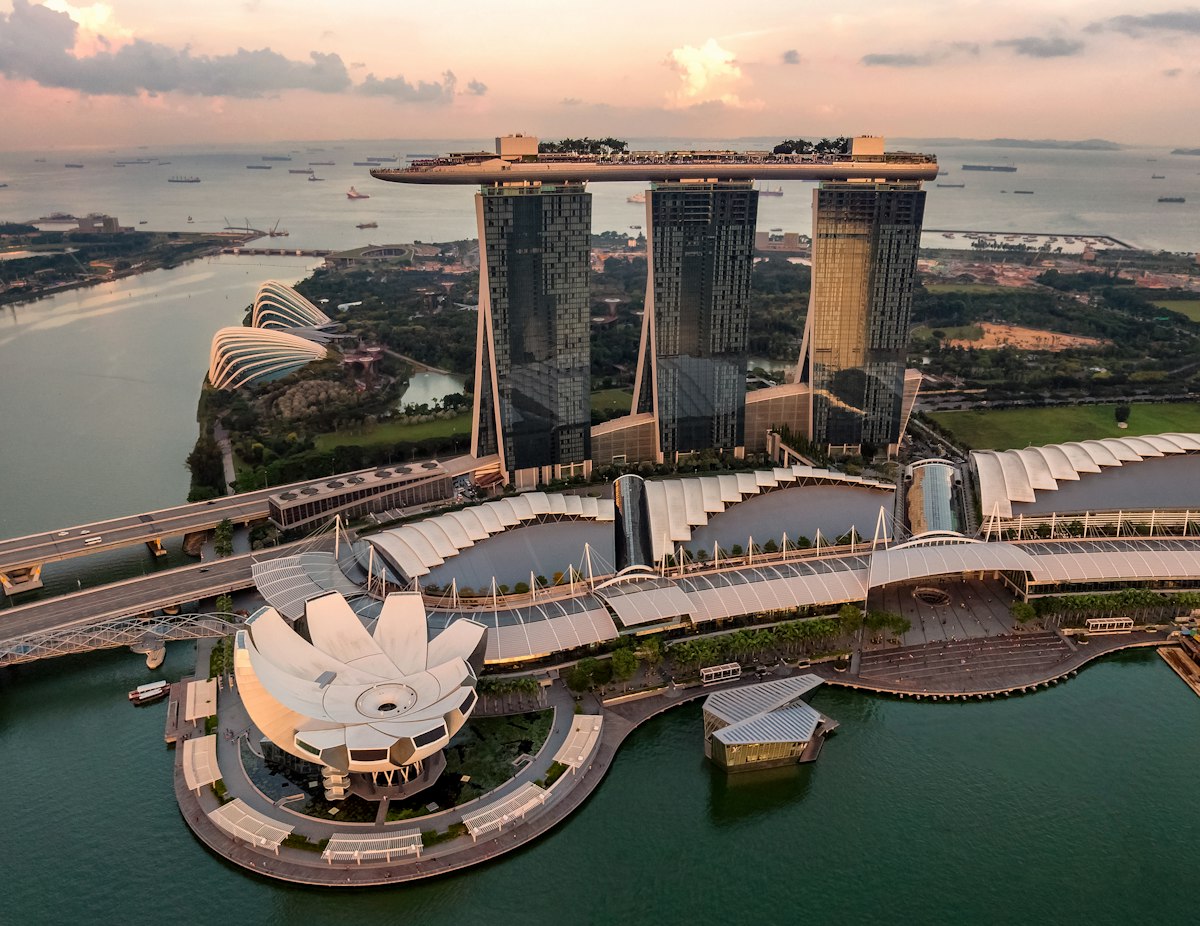
Moving to Singapore: Expat Guide & Relocation Hub
Monthly cost
$4,000–8,000
per month, expat lifestyle
Visa friction
Remote
Limited
Family fit
8/10
Language barrier
Low
Healthcare
10/10
Quick take
The world's most efficient city-state, and one of its most expensive.
Essential context
Before you move here
Cost
$4,000–$8,000/month covers a comfortable expat lifestyle. City-center rent typically runs $2,500–$4,500/month.
Visa path
Friction rated: Complex, expect documentation-heavy applications. Employment Pass (EP) is available.
Remote work
Remote setup is possible but limited. Broadband: excellent; coworking: widespread.
Healthcare
Quality scores 10/10. Private insurance typically runs $100–$300/month per person.
Daily life
English is widely spoken, integration barrier is low. Setting: Urban, Tropical.
The visa path is complex, but Singapore at $4,000–$8,000/mo rewards those who commit.
The world's most efficient city-state, and one of its most expensive. Singapore's combination of safety, infrastructure, global connectivity, and business ease makes it Asia's default choice for the high-earning professional.
Moving to Singapore is the choice of the Asia-based professional who values efficiency, safety, connectivity, and quality of life above cost. The cost of living in Singapore runs $4,000–$8,000 per month and regularly more for families with international school fees and a car. What Singapore offers in return is unmatched in Asia: the world's best airport, healthcare that is genuinely world-class, a legal system that functions, English as the primary professional language, and a position at the intersection of global commerce that makes it genuinely irreplaceable as an Asia headquarters. Singapore for remote workers is complex, there is no digital nomad visa, and working remotely for a foreign employer without the correct permit creates legal exposure. Singapore for families means extraordinary international schools, world-class safety, and an extraordinary food culture that extends from hawker centres at $3 to Michelin-starred restaurants within the same city.
Good for
Fit assessment
This move works well if you...
- ✓Senior Finance and Tech Professionals
- ✓Families requiring top-tier schooling
- ✓Asia Regional Headquarters
- ✓High-Earners
Pause and reconsider if...
- —Among the world's highest costs of living
- —Small geography
- —Strict legal environment
- —No digital nomad visa
The full guide includes a "Not For You" section with detailed deal-breakers specific to Singapore. Download the guide →
Cost Breakdown (Monthly)
Typical monthly estimate for a single expat. Approximate costs in USD.
Rent (City Center)
1-bedroom, monthly
$2,500–$4,500
Rent (Outside Center)
1-bedroom, monthly
$1,800–$3,200
Groceries
single person, monthly
$400–$700
Dining Out
casual meals, monthly estimate
$5–$35
Utilities
electricity, water, internet
$150–$250
Transport
local transport, monthly
$80–$150
Approximate costs only. Local prices vary with exchange rates and neighborhood. Expat-heavy areas typically run higher.
Budget by household type
How much does it actually cost?
Solo
$4,000–$5,800
/month
Varies by city
Couple
$6,000–$8,000
/month
City center or suburbs
Family of 4
$8,000–$13,200
/month
Major city recommended
Ranges based on EMELA research. Actual costs vary by city, lifestyle, and housing choice. Build your personal estimate →
Work & visa readiness
Complex setup, expect document-heavy applications and longer processing times
Singapore's Employment Pass (EP) is the main route for skilled professionals, minimum salary thresholds apply and have been raised in recent years. The One Pass is a top-tier permit for high earners. Entrepreneurs can apply via EntrePass. No formal digital nomad visa; working remotely for foreign employers requires careful structuring.
Programs & incentives
- Employment Pass (EP)
- One Pass
- EntrePass
- Global Investor Programme
Visa assistance
Need help with visas?
Navigating Singapore's visa process can involve document checklists, translations, and specific submission windows.
Check visa options →Quality of Life
How life actually feels here
Daily Life
Low barrier
Family
Mobility
Airport access
Changi Airport (SIN), consistently rated the world's best airport; exceptional global connections.
Social reality for newcomers
Singapore is constitutionally multicultural by design. Chinese, Malay, and Indian ethnic communities have coexisted as equals under law since independence. This institutional multiculturalism shapes a professional and civic culture where visible diversity is thoroughly normalised. Professional environments operate on high-standard meritocracy with little overt discrimination. Middle Eastern, South Asian, African, and Western expats all navigate Singapore's international city comfortably, often finding greater social ease than in comparable Western cities. The primary social distinctions in Singapore tend to follow income, profession, and citizenship status rather than race. Singapore is one of Asia's most genuinely inclusive expat environments.
Healthcare (Expat Reality)
Typical costs for private care. Not medical advice, ranges are approximate.
Monthly insurance
$100–$300
private health insurance, per person
Doctor visit
$20–$60
general practitioner, out-of-pocket
Major procedures
Singapore's public hospitals are world-class and significantly cheaper than private; international insurance covers both.
International health insurance is standard for expats. Medisave contributions apply to EP holders. Healthcare quality is exceptional across both public and private.
International school costs
Typical annual tuition
$20,000 – $50,000
per year, international schools
Approximate monthly equivalent
$1,650 – $4,150
per child, per month
Expat reality
International schools in Singapore are among Asia's most expensive, top schools like United World College and Tanglin Trust run S$35,000–S$55,000 per year. Demand exceeds supply at top schools.
Ranges reflect international / private schools. Public schooling is available at little or no cost in most countries.
On the ground
Local Realities
Daily Life
- 01
Hawker centers are Singapore's great equaliser, a $3–$5 plate of chicken rice, laksa, or char kway teow from a Michelin-listed hawker stall is genuinely excellent. Residents eat at hawker centres multiple times per week.
- 02
Owning a car in Singapore requires a Certificate of Entitlement (COE), currently $80,000–$120,000 USD for a typical car quota, on top of the vehicle price. Most expats use Grab and public transport.
Culture
- 03
Singapore is four cultures (Chinese, Malay, Indian, Western) existing in close proximity, understanding which register you're in, and adjusting accordingly, is a valuable skill that takes time to develop.
Reality
- 04
Employment Pass thresholds have been raised regularly, S$5,000/month minimum for most roles, S$10,500 for financial services, as of recent updates. The local hiring preference policy is real and enforced.
The honest reality check
Singapore is expensive enough that the "Asia affordable" assumption simply does not apply, rent, schooling, and car ownership are among the world's most expensive. The city-state is small: 733 sq km means no countryside escape and limited natural variation. Rules and fines are real and enforced. Local employment market has tightened for foreign hires.
Common tradeoffs to expect
Cities in Singapore


Start here
The guides most relevant to your move.
Cost of Living in Singapore: The Honest Expat Breakdown
A detailed breakdown of what Singapore actually costs, housing, food, transport, healthcare, and what a comfortable expa…
Easiest Digital Nomad Visas Right Now
The digital nomad visas that are actually easy to obtain in 2026, with clear income requirements, straightforward applic…
Raising Children Abroad: A Realistic Family Relocation Guide
What raising children internationally actually involves, international school costs, pediatric healthcare, safety, socia…
Best Countries for Remote Workers
The countries that have built genuine infrastructure for remote work: evaluated on visa frameworks, internet quality, ti…
The Singapore Relocation Guide, 2026
Research-grade · Delivered to your email
What's inside
- Budget breakdown by household type (Solo, Couple, Family)
- Visa pathway comparison with income requirements
- City deep-dives, 4 cities with neighborhood picks
- 90-day landing plan (Day 1–30, 31–60, 61–90)
- Banking, tax ID & lease practicalities
- Common mistakes and how to avoid them
- Monthly budget
- $4,000–$8,000 / month
- Visa complexity
- high
Free · No paywall · Sent to your inbox
Typical housing
Other details
Prominent religion
Buddhist / Taoist / Multi-faith
Cannabis status
Cannabis: IllegalStart here
Also worth knowing
Start with a short-term furnished rental for your first 4–8 weeks, it gives you time to explore neighborhoods in person before committing to a long-term lease.
Personal income tax rate
0–24%
Expat provision
Singapore taxes only Singapore-source income. Foreign-sourced income is not taxed when remitted. Top rate of 24% applies above S$1 million, one of Asia's lowest top rates for high earners.
Singapore uses a territorial tax system. No CGT. No inheritance tax. GST applies to consumption. One of the most tax-efficient environments in the world for high earners.
Tax laws change, verify current rules with a qualified tax adviser familiar with Singapore.
Legal status
Section 377A decriminalised in 2022; same-sex marriage not recognised
Singapore decriminalised same-sex intimacy in 2022 but has constitutionally protected the definition of marriage as between a man and woman. The urban LGBTQ+ community is visible; Pink Dot operates annually. Official stance remains conservative.
Broadband
ExcellentMobile data
ExcellentCoworking spaces
WidespreadTypical coworking day pass
$25–$55 USD/day
Required vaccinations / documents
Singapore has a detailed pet import regime. Dogs and cats from approved countries undergo a rabies titre test and may require quarantine. Breed restrictions apply (certain breeds prohibited). Engage a specialist relocation service.
Summary only, verify current official requirements before travel.
Practical tools
International Banking
Moving money across borders
Most people relocating abroad open a multi-currency account before they arrive. It handles international transfers more cleanly than a domestic bank and avoids the conversion fees that add up quickly.
See how Wise works →International Health Insurance
Health coverage for long-term expats
Standard travel insurance typically does not cover long-term residency abroad. Expat-specific health coverage is worth reviewing early — before any pre-existing conditions become a documentation issue.
Review SafetyWing coverage →Visa Processing
Navigating the application process
For many destinations, visa applications involve document checklists, translations, and specific submission windows. A processing service checks eligibility and handles the paperwork — common for first-time applications.
Check visa eligibility →
Next Step
Get clear before you decide
Most people reach this point and realize the details matter more than expected, visas, real costs, and what actually applies to them. This is where we help you make a confident decision.
Talk through your move with clarity
Apply for a free 30 minute call with one of our relocation specialists
Apply for a Call →Your personalized plan for Singapore
City comparisons and neighborhood starting points, built around your quiz and budget answers.
$49 · Delivered within 24 hours
Quick reference · 2026
Singapore. Key facts for expats
Monthly budget (solo)
$4,000–$8,000
Visa entry
Complex path
Remote-work readiness
Remote work possible but limited · Broadband: excellent
Best city for remote workers
Family viability
Highly family-friendly (8/10) · Healthcare: 10/10
Tax system
territorial · Resident after 183 days
Why people move to Singapore in 2026
Moving to Singapore is the choice of the Asia-based professional who values efficiency, safety, connectivity, and quality of life above cost. The cost of living in Singapore runs $4,000–$8,000 per month and regularly more for families with international school fees and a car. What Singapore offers in return is unmatched in Asia: the world's best airport, healthcare that is genuinely world-class, a legal system that functions, English as the primary professional language, and a position at the intersection of global commerce that makes it genuinely irreplaceable as an Asia headquarters. Singapore for remote workers is complex, there is no digital nomad visa, and working remotely for a foreign employer without the correct permit creates legal exposure. Singapore for families means extraordinary international schools, world-class safety, and an extraordinary food culture that extends from hawker centres at $3 to Michelin-starred restaurants within the same city.
Frequently asked questions
How much does it cost to live in Singapore?
Living in Singapore typically costs $4,000–$8,000 per month for a comfortable expat lifestyle. A one-bedroom apartment in the city center rents for $2,500–$4,500/month; outside the center, expect $1,800–$3,200/month. Monthly groceries run $400–$700 and transport around $80–$150.
What visa do I need to move to Singapore?
Singapore's Employment Pass (EP) is the main route for skilled professionals, minimum salary thresholds apply and have been raised in recent years. The One Pass is a top-tier permit for high earners. Entrepreneurs can apply via EntrePass. No formal digital nomad visa; working remotely for foreign employers requires careful structuring. Available relocation programs include: Employment Pass (EP), One Pass, EntrePass, Global Investor Programme.
Is Singapore good for remote workers?
Singapore is not ideally positioned for remote workers. Internet infrastructure is rated excellent, with coworking spaces widespread across the country at approximately $25–55/day. Mobile data reliability is excellent.
What is healthcare like in Singapore for expats?
Singapore scores 10/10 for healthcare quality. International health insurance is standard for expats. Medisave contributions apply to EP holders. Healthcare quality is exceptional across both public and private. Expat health insurance typically costs $100–$300/month, with a typical doctor visit around $20–$60.
What are the tax implications of moving to Singapore?
Singapore uses a territorial tax system. No CGT. No inheritance tax. GST applies to consumption. One of the most tax-efficient environments in the world for high earners. Singapore taxes only Singapore-source income. Foreign-sourced income is not taxed when remitted. Top rate of 24% applies above S$1 million, one of Asia's lowest top rates for high earners. Singapore uses a territorial income tax system with personal rates of 0–24%. Tax residency is generally triggered after 183 days in-country.
Similar destinations to consider


Quick take
The world's most efficient city-state, and one of its most expensive.
Best for
Thinking About Making The Move? We're Here to Help.
Talk through your move with clarity
Apply for a free 30 minute call with one of our relocation specialists
We'll break down what actually applies to you, visa paths, real costs, and the risks most people don't see coming.
Apply for a Call →Your personalized plan for Singapore
Your quiz and budget answers, mapped against the main cities: with neighborhood starting points and a realistic cost picture for your situation.
$49 · Delivered within 24 hours